Khichdi (simply rice and lentils),as far as I know, is the oldest dish to exist in Indian history and cuisine. Over my lifetime, I have eaten various forms of khichdi. I also recently tried the famous Hyderabadi version paired with kheema (minced meat), and it has convinced me that khichdi does not always have to be boring. I am well aware that khichdi disguises itself as a sick food, but its simple flavors and balanced nutritional value, in my opinion, make it a top-notch comfort food. This recipe is my mom’s go-to khichdi recipe, with a little twist of my own, making it the “greenest khichdi ever”.
This simple rice and lentil dish is far more regal and ancient. It is a recipe that has existed for around 2000 years, mentioned in the Mahabharata, Ayurvedic texts and even Mughal history. This rich and nutritious combination has traveled across generations, nations and every version of it, from the Bengali khichuri to Karnataka’s bisibele bhat or the Tamilian Pongal, has continued to remain a comfort food.
_______________________________________________________________________
GREEN KHICHDI (makes 2-3 servings)
What you need:
- Ghee 1 tbsp
- Mustard seeds 1 tsp
- Cumin seeds 1 tsp
- Curry leaves, a handful
- Onions diced, 1 medium
- Asafoetida powder, a pinch
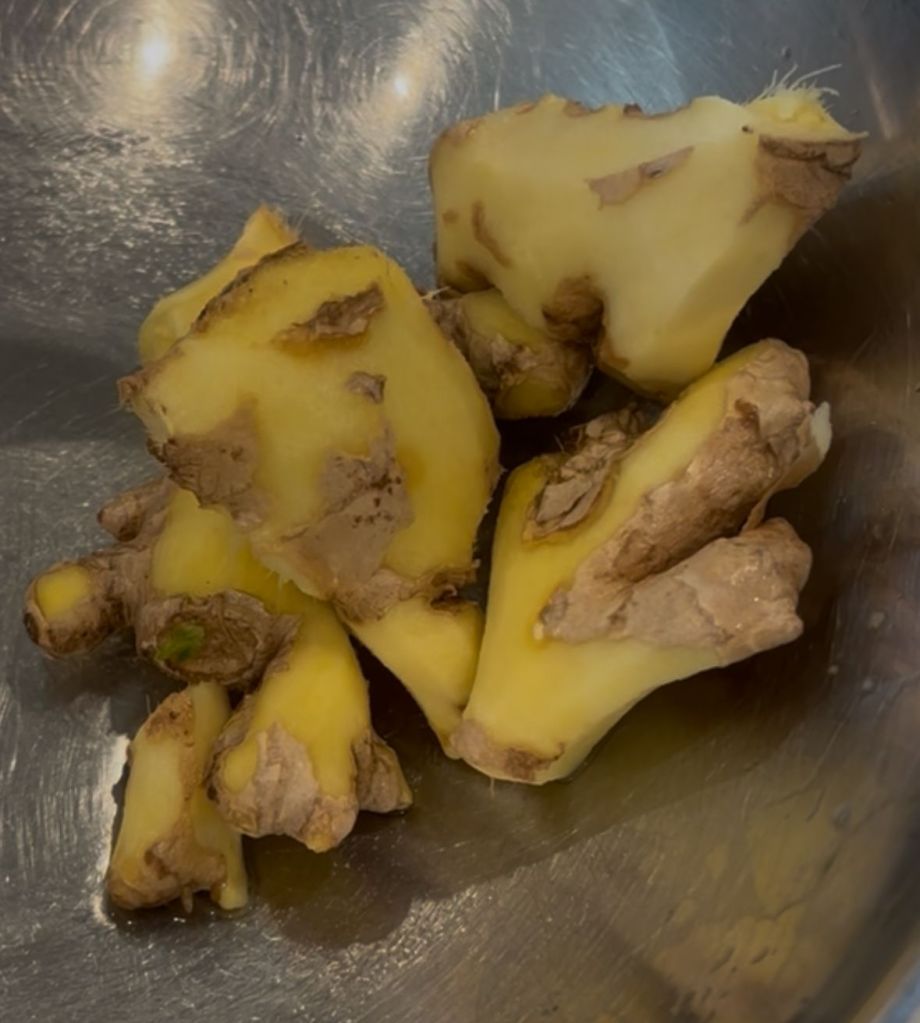
- Green paste: green chillies, spinach leaves, ginger, mint leaves
- 1:1:3 ratio for rice, moong dal, water (since the green paste is going to be watery, you may have to adjust your water ratio accordingly)
- Your choice of veggies – carrots, beans, tomato, peas
- Peppercorns, 1-2 tsp (My mom likes to use peppercorns because she says biting into a peppercorn gives a great touch, and whole corns add a subtle flavor. You can add pepper as such if that’s what you have!)
- Salt, as needed and turmeric powder, 1 tsp
What to do:
- Start by washing your rice until the water runs clear. (Important step, do not skip it!)
- Add rice and moong dal in a 1:1 ratio. (You may adjust this ratio as you like, but this is a good starting point!)
- To make the green paste: Add washed spinach leaves, green chillies, ginger and mint leaves into a mixer or blender jar and blitz until fine.
- Prep your veggies. Chop them into small cubes. You can use any vegetables that you have at home!
- In a pressure cooker, add 1 tbsp ghee. Start with a tadka using mustard seeds, cumin seeds, a handful of curry leaves and a pinch of asafoetida. Once it becomes aromatic, add your onions and veggies.
- Add the pre-soaked rice + lentil. Mix it all together. Add salt and turmeric as needed.
- Let the pressure cooker do its magic! Serve with 1tsp of ghee and eat hot for the best experience!
_________________________________________________________________________
✨Mindfuel bites✨
- Khichdi, often referred to as Kitchari in Ayurveda, is a hero dish because it is easy to digest and has a complete nutritional profile.
- Soaking before cooking, even for a minimum of 30 mins, reduces cooking time, improves digestibility, and reduces anti-nutritional factors like phytates, tannins and enzyme inhibitors.
- The Kshemakutuhalam, a 16th-century Ayurvedic text on dietetics, describes traditional Indian cuisine, including combinations of ingredients to be used in different recipes and their health benefits, at length.
- In traditional Indian cooking, using a combination of cereal and pulse is quite common across the country as various dishes (Khichdi/pongal/idli/dosa/dhokla/dal baati/zunka or pitla bhakar/dal dhokli/handvo/thalipeet/puttu kadala/dal paratha) and has been in practise since generations. When combined in the ratio of 3:1, cereals and pulses complement one another, providing complete protein with all essential amino acids. This is also known to decrease the glycemic index of meals.
_________________________________________________________________________
Read more:
Salis S, Virmani A, Priyambada L, Mohan M, Hansda K, Beaufort C. ‘Old Is Gold’: How Traditional Indian Dietary Practices Can Support Pediatric Diabetes Management. Nutrients. 2021 Dec 10;13(12):4427. doi: 10.3390/nu13124427. PMID: 34959978; PMCID: PMC8707693.
Purushotham A, Hankey A. Vegetarian Diets, Ayurveda, and the Case for an Integrative Nutrition Science. Medicina (Kaunas). 2021 Aug 24;57(9):858. doi: 10.3390/medicina57090858. PMID: 34577781; PMCID: PMC8471560.